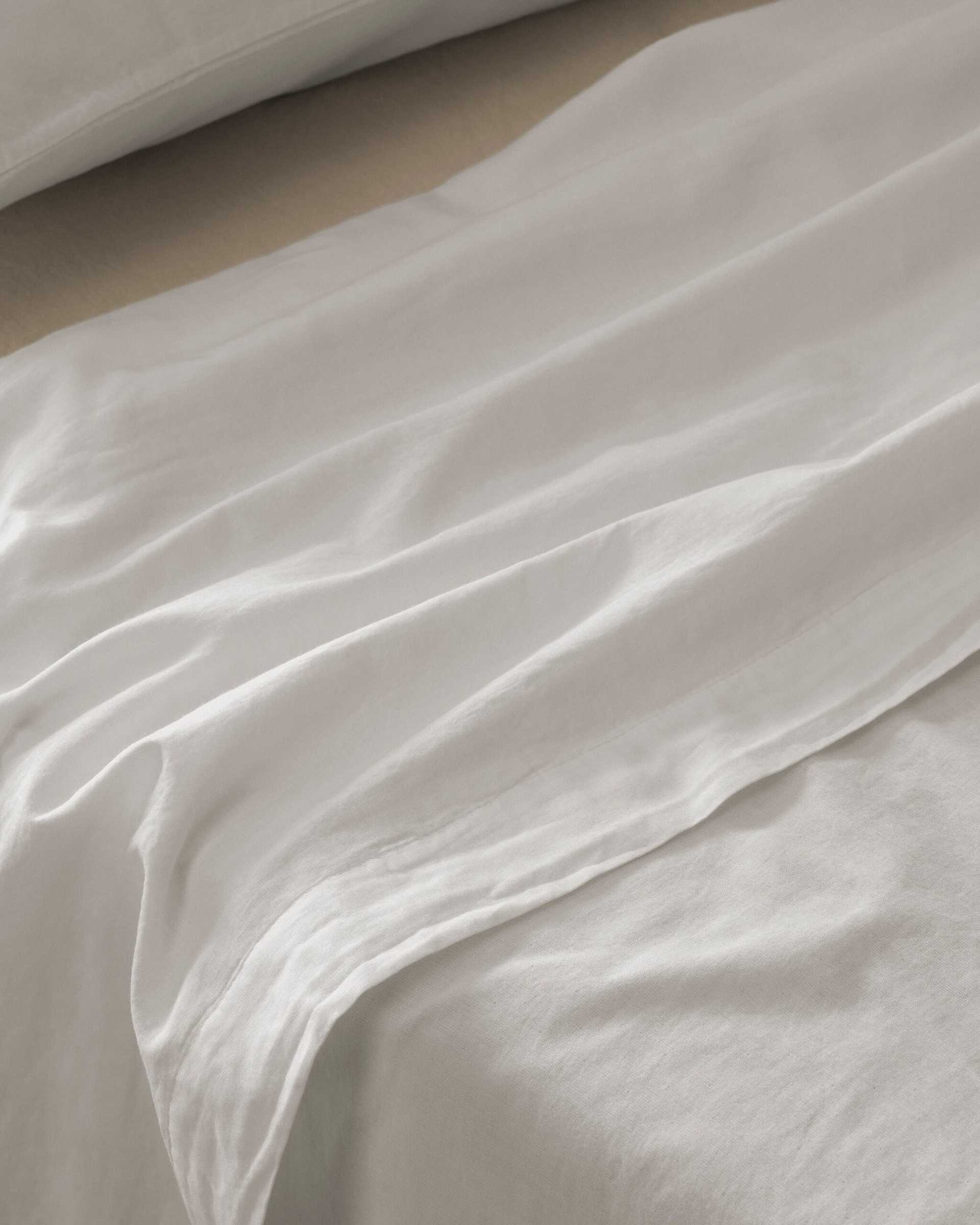
Bedding · Materials and Care
Naturepedic Organic Cotton: A Guide to Care, Certification, and Linen Lifecycle
Organic cotton bedding is defined by more than a label or a first impression. Fiber claims, certification scope, weave, fit, laundering and daily handling all help determine how sheets perform over time. Here is a practical framework for evaluating those details—and caring for bedding so that comfort and useful life have a chance to go together.
Published November 17, 2026
A bed sheet can look simple: a length of fabric, a hem, perhaps elastic around the corners. Yet its life begins long before it reaches a mattress. Cotton is grown and processed, spun into yarn, woven, finished, cut and sewn. After purchase, the sheet enters another cycle—washing, drying, storage and repeated use. The choices made at each stage affect what the label means, how the cloth feels, and how long it remains fit for purpose.
That perspective is useful when considering Naturepedic organic cotton bedding, or any bedding presented as organic. Certification is an important source of evidence, but it is not a complete description of a finished product. A careful assessment also considers the fiber and fabric construction, the product’s stated care instructions, fit, durability and the transparency of the claims. For households and hospitality teams alike, such details make comparisons more meaningful than a single headline number.
What “organic cotton” tells you—and what it does not
Organic cotton refers to cotton produced under an agricultural standard that restricts certain synthetic pesticides, fertilizers and genetically modified seeds, subject to the rules of the relevant certification system. The precise requirements depend on the standard and the country or market involved. The phrase describes a fiber claim; on its own, it does not tell you every detail about a finished sheet’s dyeing, finishing, stitching, labor conditions or performance.
That distinction matters because a textile product passes through multiple steps and facilities. A cotton fiber can be certified at the agricultural stage while later processing involves a different set of requirements. When a product carries a broader textile certification, the scope of that certification—and the particular product or supply-chain stage it covers—becomes important. The most useful question is not simply “Is it certified?” but “What exactly is covered, and how can I verify it?”
Naturepedic’s product information may identify organic materials or certifications for particular bedding items. Treat the specific product page, sewn-in label and current certification records as the reference points. Product lines can differ, and wording can change. A brand-level statement should not automatically be assumed to apply in precisely the same way to every item, component, color or production run.
Reading certification labels with care
GOTS, the Global Organic Textile Standard, is one widely recognized textile standard associated with organic fibers and processing criteria. It is more than an agricultural claim: depending on the applicable version and scope, it sets requirements across stages of textile processing and includes environmental and social criteria. Still, the presence of a phrase or logo in marketing copy is not a substitute for checking the certification details.
When evaluating a GOTS claim, look for specific, verifiable information. A certificate or certification reference should make it possible to identify the certified organization and clarify what activities or products are covered. A certification covering a manufacturer’s facility is not necessarily equivalent to a transaction certificate confirming that a particular shipment of goods was handled as certified. The distinction can matter when you are trying to trace a finished product rather than assess a company’s general capabilities.
Labels may also use terms such as “made with organic materials” or refer to an organic content percentage. Those terms can have different meanings under different standards. Read the exact wording rather than assuming that an entire sheet, including all trims and components, is organic. Ask whether the claim applies to the cotton fiber, the finished textile, the product as sold, or a particular part of its supply chain.
- Identify the standard. Find the certification name and, where available, a certificate number or certifying body.
- Check the scope. Look for the organization, product category, facility or supply-chain stage covered by the documentation.
- Read the material statement. Confirm whether the claim applies to the whole product or specifically to its cotton fabric.
- Confirm the product identity. Make sure the record and label refer to the item you are considering, not merely a related collection or company.
- Separate certification from performance. A standard can provide evidence about defined criteria; it does not, by itself, guarantee a particular softness, lifespan or laundering result.
Certification is best understood as a tool for accountability, not a shortcut around product research. It can help establish that specified requirements have been assessed by an independent system. It cannot tell you whether a fitted sheet will suit your mattress depth, whether a particular weave will feel crisp or smooth to you, or how the fabric will respond to the laundering equipment available in your home or property.
Fiber, weave and construction: the parts you feel
Organic status describes how cotton is produced under the relevant rules. The way a sheet feels and behaves also depends on fiber characteristics and fabric construction. Longer cotton fibers can be spun into smoother yarns with fewer exposed fiber ends, though quality depends on more than staple length alone. Yarn preparation, weaving, finishing and sewing all contribute to the final cloth.
Percale and sateen are different weave structures, not grades of organic quality. Percale typically has a balanced, plain weave and a crisp, matte hand. Sateen uses a weave pattern that places more yarn floats on the surface, creating a smoother feel and a soft sheen. People often describe percale as cool and sateen as silky or warm, but individual experience also depends on room temperature, bedding layers, fabric weight and personal preference.
Thread count can be one point of reference, but it is not a complete measure of quality. Counting conventions vary, and a large number alone does not establish fiber quality, breathability, construction or durability. For a useful comparison, consider thread count alongside fiber content, weave, fabric weight if provided, sewing quality and care instructions. A well-made fabric suited to its intended use can be a better choice than one selected only for a high number.
Construction becomes practical when a sheet is put on a bed. Check mattress dimensions and depth, including any topper. A fitted sheet that is too shallow can pull free at the corners; one that is excessively loose may wrinkle or shift. Seam integrity, elastic quality, hem width and consistent sizing matter in repeated use. For organizations managing several beds, consistent specifications make replacement purchasing and inventory control more straightforward.
A label-led laundering routine
There is no single wash temperature or drying method that suits every organic cotton sheet. A general-purpose routine may sound convenient, but product finishes, dyes, stitching and construction differ. The care label is the primary guide. Follow it first, and contact the manufacturer if the label is unclear or conflicts with other published instructions. Avoid treating general bedding advice as a replacement for item-specific directions.
Before the first wash, check the label for water temperature, cycle, bleach restrictions and drying guidance. Close zippers on other laundry, separate light and dark colors when appropriate, and avoid overloading the washer. Sheets need room to move through water and rinse thoroughly. A crowded drum can leave detergent residue or increase tangling and friction, while washing sheets with rough items such as garments with hooks may contribute to snags.
Use a detergent appropriate to the care instructions and the soil level. More detergent is not necessarily better: excess product can be difficult to rinse away and may leave a coating that affects feel. Avoid bleach or fabric softener unless the product care directions explicitly allow it. These products can affect dyes, fibers or finishes in ways that vary by formulation and textile. If stains need treatment, test a discreet area when feasible and use a method compatible with the label.
Drying is another point where routine choices accumulate. High heat and prolonged tumbling can place additional stress on cotton fibers and seams. If the care instructions permit, a lower dryer setting and prompt removal can help limit overdrying and deep creasing. Line drying may be an option, but it should still follow the label and local conditions. Ensure sheets are thoroughly dry before folding and storing them; lingering dampness can encourage odor and is unwelcome in a linen cupboard.
Ironing is a matter of preference and product guidance. A sheet does not need to be pressed to be clean. If a crisp appearance is important, follow the recommended iron setting, and consider removing the fabric while slightly damp only when the care instructions allow. For hospitality use, balancing presentation expectations with fabric care can reduce unnecessary heat and handling. A neat bed is a standard of service; extreme pressing is not the only route to one.
Softness, durability and expectations over time
Cotton often changes with washing. A fabric may feel different after its first few laundering cycles as residual processing materials are removed and the structure settles. That does not mean every sheet will become steadily softer forever, or that softness alone is a reliable measure of quality. Repeated friction, excess heat, harsh treatment and poor fit can contribute to thinning, pilling, seam damage or fading. The exact outcome depends on the fabric and its use.
Color retention is influenced by dyeing and finishing as well as the laundry routine. Wash colored items according to their instructions, avoid unnecessary exposure to direct sunlight during storage or drying, and separate colors when the label or early wash experience suggests it is wise. White sheets can also change appearance over time through detergent residue, water conditions or contact with other laundry. Avoid using stronger chemicals as a reflex; first review the care instructions and identify the likely cause.
For a hotel, guest house or other high-turnover setting, useful life is not just a feeling. It is a combination of acceptable appearance, comfort, fit, cleanliness and structural condition. A simple linen log can record purchase date, size, color, wash method and the reason an item is retired. In a household, a smaller version of the same approach—keeping a matched spare set and noting products that wear unusually quickly—can prevent guesswork when it is time to replace bedding.
The linen lifecycle, from purchase to retirement
A textile’s lifecycle includes more than its raw material. Cotton cultivation, processing, transport, use, laundering and disposal all contribute to its overall footprint. Organic certification may address defined production and processing criteria, but it does not mean that a product has no environmental impact. Growing cotton still involves land and water, and a sheet still requires energy and resources to manufacture, ship, wash and dry.
One practical way to think about lifecycle is to make a considered purchase, then use the item well. Choose a fabric and construction that fit the intended bed and laundering capacity. Avoid buying a size that will pull loose or a delicate fabric for a high-intensity laundry routine unless its care requirements can realistically be met. A durable product kept in service for longer may avoid an early replacement, though actual environmental comparisons depend on the materials, manufacturing and use pattern involved.
When a sheet is no longer suitable for a guest bed, inspect it before discarding it. If it remains clean and structurally sound, reuse may be possible in a lower-demand setting. Textile recycling and donation options vary by region and by the condition and composition of the material, so check local programs rather than assuming every facility accepts household linens. If the fabric is torn, stained or degraded, follow local disposal guidance.
In hospitality operations, end-of-life decisions should be documented and consistent. Set clear criteria for when a sheet is removed from guest use: persistent damage, compromised seams, staining that cannot be remedied safely, poor fit or a condition that no longer meets the property’s presentation standard. Reuse for non-guest purposes should be subject to hygiene rules and should never blur the distinction between clean guest linen and maintenance cloths.
A practical checklist for comparing organic cotton bedding
Before purchasing, bring the material claim, the bed and the laundry routine into the same conversation. The following checklist is useful for individual buyers and can also be adapted for procurement teams:
- Confirm the exact fiber content and whether the organic claim applies to the cotton fabric, a component or the finished product.
- Look up the named certification and review the scope rather than relying only on a logo or a general company statement.
- Compare weave and fabric details with the feel you prefer: crisp and matte, or smooth with a subtle sheen.
- Measure the mattress, including any topper, and verify fitted-sheet pocket depth and available sizes.
- Review the care label before buying, especially if your laundry setup requires a specific wash or drying method.
- Check seams, elastic, hems and product documentation; for bulk orders, request consistent specifications and traceability information.
- Keep records of purchase, laundering issues, repairs and retirement so that future choices can be based on actual performance.
A more durable standard of care
Good linen care is not complicated, but it is specific. Read the product label, avoid assuming that all cotton behaves identically, use a wash cycle suited to the fabric, and dry without unnecessary heat. Check the fit and seams periodically. These small habits support a clean presentation and may help reduce avoidable wear, though no routine can guarantee a particular lifespan.
For Naturepedic organic cotton bedding, certification can provide a useful starting point for understanding material and processing claims. It should be considered alongside construction, product-level documentation and care guidance. The strongest decision is one that connects the label to the real object: the sheet’s fiber, weave, size, expected use and maintenance needs.
That is the larger lesson of the linen lifecycle. A sheet is not simply purchased and then consumed; it is selected, cared for, assessed and eventually retired. Looking closely at each stage makes the promise of organic cotton more legible—and gives both households and hospitality teams a practical basis for choosing bedding that can serve them well, wash after wash.

